
OnlyFans subscription pricing is dynamic, not fixed, which directly answers the question of why the number you pay today can look different next month. That means the same page with the same content library can shift in cost within a single billing cycle. This guide breaks down the pricing rules, the signals creators watch, and the protections that keep a sudden increase from hitting your card. BestOnlyFans refreshes its rankings every month.

The Foundation of OnlyFans Pricing Rules
The minimum paid base rate is $4.99 per month and the maximum is $49.99 per month. A creator cannot set a permanent paid tier below that floor, so you will never see a standard subscription listed at $2 as the standing rate. Free pages are the exception: they set the price to $0 and earn through pay-per-view messages and tips.
There is one legitimate way to pay less than $4.99, and it is temporary. Promotional first months can drop below the minimum, so a $3 entry month is a real offer rather than a pricing error. Once that window closes, the subscription reverts to the creator’s base rate, which must sit at or above the $4.99 floor.

Typical pricing runs from $4.99 to $15, with averages settling around $5 to $10. Premium rates of $15 to $49.99 exist, but they usually track higher content volume, faster reply times, or a busier direct-message schedule. The platform takes a 20% fee on everything and the creator keeps 80%, which is why small differences still matter to the person setting them.
| Pricing Tier | Monthly Cost | Accessibility Level |
|---|---|---|
| Promotional first month | $3-$4.98 | Entry offer only; reverts to base rate after the window closes |
| Standard paid subscription | $4.99-$15 | Most common tier; standard feed plus optional paid messages |
| Premium creator rate | $15-$49.99 | Higher content volume and faster direct interaction expectations |
Beyond the base subscription, spending can extend into pay-per-view unlocks of up to $50, paid chat that commonly runs $3 to $5 per message, and tips that can reach $100. A card verification hold of $0.10 may appear when you add a payment method; it is refunded within days. None of these extras change your base rate, but they change what a page costs you in practice.
Creator Signals That Trigger Price Adjustments
Creators rarely change a price at random. Most adjustments follow measurable changes in how the page performs, because pricing is one of the few levers that affects both new signups and retention. When a page grows quickly, the creator often tests a higher rate to see whether demand holds.
Five internal metrics drive most of those decisions, and none are visible to subscribers in raw form.
- Follower growth rate, measured week over week rather than in total
- Message response ratio, tracking how many paid messages get answered
- Tip frequency, including how often tips arrive without a prompt
- Content engagement percentage, based on how many subscribers interact with new posts
- PPV purchase conversion, showing how many subscribers unlock paid content
A creator whose engagement percentage rises while response times stay fast has room to raise the base rate. One whose tip frequency drops and PPV conversion flattens usually has the opposite problem and will often lower the entry price instead.
Tip: screenshot a creator’s listed price and the date you saw it. When the rate changes, that timestamp tells you whether the increase happened during a demand spike or at the end of a quiet period.
Our ranking methodology behind BestOnlyFans tracks these public price movements over time rather than treating a single listed number as permanent. That approach matters because a snapshot price can be promotional, temporary, or about to change within the same billing cycle.
How Ranking Visibility Alters Perceived Value
There is no browse page where subscribers stumble onto new creators, which is exactly why external ranking sites exist. When a page appears near the top of a category ranking, it receives a stream of visitors who arrive already interested, and that traffic changes the creator’s pricing calculus.
A creator who moves up several positions in a month can point to that visibility as evidence of demand and raise the base rate with less risk of losing existing subscribers. The increase is not driven by better content alone; it is driven by the fact that more people are arriving through a ranked entry point.
This creates a feedback loop. Higher visibility brings more subscribers, more subscribers justify a higher price, and a higher price can itself signal quality to new visitors. The loop does not run forever, because at some point the price outpaces what the new traffic will pay.

Seasonal Demand Cycles in Subscription Pricing
Seasonal shifts cluster in periods when subscriber attention and disposable income move together, and creators who track their own numbers tend to adjust rates at the same six points on the calendar.
- January, after holiday spending ends and subscribers reassess recurring charges
- March, when tax refund season gives some subscribers extra discretionary budget
- May, around graduation season and the start of summer schedules
- July, during a mid-year reassessment of both content plans and spending
- September, when routines reset and subscription habits stabilize again
- November, ahead of the pre-holiday content push and year-end promotions

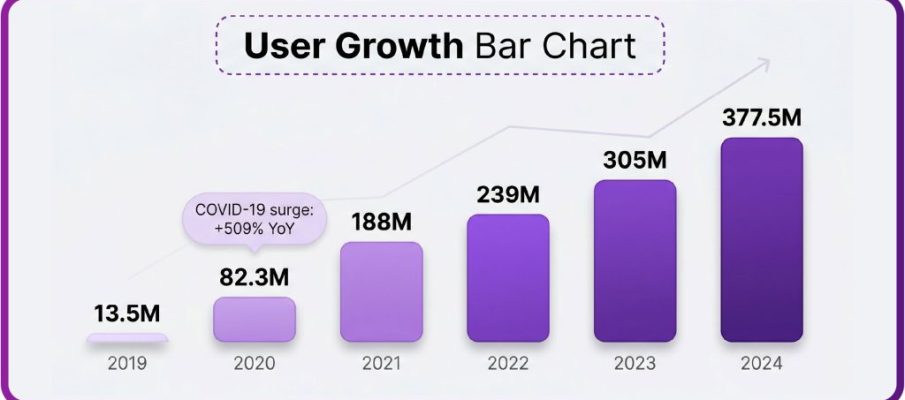
Yearly user growth shows sharp expansion periods followed by plateaus, and pricing behavior tends to follow the same rhythm rather than rising in a straight line.

Auto-Renewal Protection When Prices Rise
Your existing access continues until the paid period you already bought runs out, and you are not charged the new rate unless you actively resubscribe at the higher price.
Price decreases work differently. If a creator lowers the rate, subscribers pay the new lower amount at the next renewal, and auto-renewal continues if it was already enabled. Promotional expirations are a third case: when a first-month offer ends, the subscription reverts to the base rate, and auto-renewal proceeds at that base price if it is still switched on.
| Scenario | Subscriber Impact | Action Required |
|---|---|---|
| Creator raises the price | Auto-renew stops; existing access lasts until the paid period ends | None to keep current access; resubscribe manually to continue |
| Creator lowers the price | Subscriber pays the new lower rate at the next renewal | None, provided auto-renew is enabled |
| Promotional month expires | Rate reverts to the creator’s base price | Review the new amount before the next renewal date |
That single rule removes most of the risk from following a creator whose rate is trending upward, because the decision to continue stays with you.
Budgeting Around Predictable Price Volatility
Once you accept that rates move, budgeting becomes a matter of planning for movement rather than assuming stability.
- Keep a 20% cushion above your current subscription total to absorb increases
- Track renewal dates separately from billing dates so you see changes before charges land
- Prioritize creators whose historical pricing has stayed flat over several months
- Set price-change alerts on ranking sites instead of checking each page manually
If you want a rough gauge of demand pressure before a price moves, tracking how creators phrase their own updates helps. Some of the patterns in the best onlyfans messages show how pages announce changes, promotions, and loyalty offers before a rate shift becomes visible on the subscription page.
Wallet credits are another useful buffer. Loading a balance in advance lets you extend access to a page during a transition period without rushing a decision on whether the new rate is worth it.
Reading Pricing History on Ranking Cards
Ranking cards compress a lot of pricing information into a small space, and most subscribers only look at the current number.
- Current price, which may be promotional rather than the base rate
- Promotional status indicator, showing whether a discount is active
- Price change frequency icon, revealing how often the rate has moved
- Stability score, summarizing how consistent pricing has been over time
- Comparative percentile within category, placing the rate against similar pages
A page with a high stability score and a low change frequency is unlikely to move soon. A page with frequent changes and an active promotional indicator is more likely to adjust once the promotion ends. Ranking cards on BestOnlyFans display these signals side by side, which makes comparing two pages far faster than opening each subscription page individually.

Long-Term Subscriber Strategies for Rate Fluctuations
Staying subscribed to a creator through several price changes takes planning, but it rarely requires paying every increase.
- Capture the content you value before a cancellation takes effect
- Ask about custom content during transition periods when a creator is adjusting rates
- Watch creator announcements for loyalty discounts offered to existing subscribers
- Use wallet credits to extend access across a billing boundary
- Evaluate replacement creators before a cancellation finalizes, not after

Account security supports all of this. Two-step authentication on your account keeps a pricing decision from turning into an access problem if a login is ever compromised during a resubscription.
Warning: cancelling to avoid a price increase also ends your access at the close of the paid period. If you plan to resubscribe later at the higher rate, check whether any promotional offer still applies, because returning subscribers do not always receive the same first-month pricing.
FAQ
Can creators change prices at any time without notice?
A creator can adjust the base rate whenever they choose, within the $4.99 to $49.99 range. There is no advance notice requirement, but the auto-renewal rule means an increase cannot charge you automatically.
Will my subscription automatically renew at a higher price if the creator raises rates?
No. When a creator raises the price, auto-renewal stops, and your existing access lasts until the paid period you already purchased ends. Continuing after that requires a manual resubscription at the new rate, so you always get to decide whether the increase is worth it.
How can I see if a creator has changed prices recently?
Check the pricing history displayed on ranking cards, which typically shows the current price, whether a promotion is active, how often the rate has changed, and a stability score. Comparing those signals across a few weeks gives a clearer picture than a single listed number.
What happens to my access if I cancel after a price increase notification?
Your access lasts until the end of the paid period you already purchased, the same as any cancellation. If you cancel during a price transition, you keep everything you paid for and avoid any chance of an accidental renewal at the higher amount.